
Common VW Problems: What We See on Golf, Polo, Tiguan & Passat
Most VW repair work on Golfs, Polos, Tiguans and Passats comes down to a handful of problems: DSG gearbox faults, timing chains on older petrol engines, coolant leaks from plastic water pump and thermostat housings, carbon build-up, and diesel DPF/EGR issues. They share engines and gearboxes, so they share faults. Most of it can be caught early, or avoided, by servicing on time with the right fluids.
The problems all four share
VW builds the Golf, Polo, Tiguan and Passat from the same parts bin, so the same weak points turn up across all four.
DSG gearbox faults
VW's DSG is a dual-clutch automatic. The 7-speed "dry clutch" version (DQ200), fitted behind smaller petrol engines, is the one most often linked to problems: judder pulling away, jerky low-speed shifts, a flashing gear indicator, or a sudden loss of drive. The cause is usually the mechatronic unit (the gearbox's control unit) or worn clutches. The 6- and 7-speed "wet clutch" versions (DQ250, DQ381) are generally tougher, but their oil needs changing on schedule.
Timing chain stretch
Some older 1.2 and 1.4 TSI engines, and early 1.8 and 2.0 TSI engines, have timing chains and tensioners that wear early. The warning sign is a rattle for a few seconds on a cold start. These are interference engines, so a chain that jumps can bend valves. The newer 1.0, 1.2, 1.4 and 1.5 TSI engines (roughly 2012 onward) use a timing belt instead, so the chain issue doesn't apply to them.
Coolant leaks from the water pump and thermostat housing
Many newer VW engines use a plastic water pump and thermostat housing that cracks or weeps with age. Look for a coolant level that keeps dropping, a sweet smell after driving, or pink crusty residue around the engine. Left alone, it can overheat the engine.
Carbon build-up
TSI petrol engines spray fuel straight into the cylinders, so nothing washes the intake valves. Carbon builds up over time and causes rough idle, misfires and lost power. It's fixed with a professional carbon clean, this is done via our walnut blasting machine.
DPF and EGR problems (TDI diesels)
Diesel particulate filters need regular motorway runs to clean themselves. Cars that mostly do short trips clog them, along with the EGR system. Warning lights, limp mode and poor economy are the usual signs, higher mileage vehicles naturally have a high carbon build up in the intake.
Water leaks
Blocked sunroof drains (common on Tiguans) and failed door seals can let water into the cabin, where it can damage electronics. If you find a damp carpet or a wet headliner, don't ignore it.
Ignition coils and spark plugs
On TSI engines this is the most common cause of a misfire and a flashing engine light. It's a quick, inexpensive fix when caught early, leaving a misfire causes major damage to the engine cylinder.
VW GOLF
The Golf is the most common VW on New Zealand roads, with more than 45,000 on the register, and what goes wrong depends a lot on which generation you have.
Golf Mk5 (about 2004–2008) Most Mk5s are now 17–22 years old, so faults from age and wear are as common as design faults.
1.4 TSI (twincharger): timing chain stretch, misfires and high oil use. NZ's AA has also reported cracked pistons on these engines, particularly when run on 91 octane. Use the 95 or 98 octane VW specifies.
GTI (2.0 TFSI): a worn camshaft follower on the high-pressure fuel pump (a rattle that comes and goes), a split diverter valve diaphragm (loss of boost and a warning light), and coil packs that tend to fail together. This engine has a timing belt, and the water pump and thermostat are usually changed with it.
6-speed DSG (GTI and TDI): hangs onto gears, hunts, or shifts jerkily when the oil hasn't been changed.
TDI diesels: turbo wear at high mileage, leaking injectors on the 1.9, cylinder head cracks on some 2.0 TDIs (unexplained coolant loss is the early sign), DPF/EGR issues, and dual-mass flywheel noise on manuals.
Age-related: air-con compressor and condenser failures, water getting into the rear footwells through door seals, misting rear lights, broken springs, worn control-arm bushes and wheel bearings, and electric windows that open on their own.
Golf Mk6 (about 2009–2012)
7-speed DSG (DQ200) faults. Many of these cars were in VW's NZ recall (see below).
Timing chain wear on the 1.2 and 1.4 TSI engines.
Oil use on some petrol engines.
Golf Mk7 and 7.5 (about 2013–2020)
Water pump/thermostat housing leaks, particularly on the 2.0 TSI (GTI and R). This is one of the most widely reported Mk7 faults.
DSG mechatronic faults.
Electric park brake faults.
Water in the cabin through the door speaker seals.
Creaks from the front suspension, and a noisy air-con compressor.
Ignition coils, plugs and wheel bearings.
The 1.4 TSI uses a timing belt, not a chain.
Golf Mk8 (2020 onward)
Mechanically sound so far.
Most reported faults are software: a slow or frozen infotainment screen, key and driver-assist glitches. VW released software updates to fix many of these, so check yours is up to date.
The job we do most on Mk7 Golfs is is the plastic water pump and thermostat housing unit. The plastic cracks or the internal gaskets fail, causing slow coolant loss and potential overheating if ignored.
VW Polo
Polo 6R/6C (about 2010–2017)
The 7-speed DSG is the Polo's best-known weak point: judder, hesitation and, at worst, sudden loss of drive.
Timing chain stretch on the earlier 1.2 TSI (roughly 2010–2014).
Carbon build-up and cooling system leaks as they age.
Polo AW (2018 onward)
Uses the 1.0 TSI engine with a timing belt.
Too new for clear long-term patterns, so regular servicing is the main thing.
VW Tiguan
Tiguan first generation (about 2008–2016)
Timing chain tensioner wear and oil use on the 2.0 TSI petrol.
Water pump/thermostat leaks.
Blocked panoramic sunroof drains, leading to wet footwells or headliner.
On 4Motion (all-wheel drive) models, the Haldex coupling that drives the rear wheels needs its oil changed. Many owners don't know it exists.
Gearbox: many first-generation Tiguans use a conventional 6-speed automatic rather than a DSG.
Tiguan second generation (2016 onward)
Water pump/thermostat housing leaks.
DSG mechatronic faults.
Oil use on some engines.
Electrical faults.
DPF/EGR on the TDI.
The most common issue we see in our workshop is Carbon Buildup on Intake Valves Direct-injection TSI petrol engines suffer from heavy carbon deposits, leading to rough idling, misfires, and loss of performance
VW recalls worth checking in NZ
DSG recall. VW New Zealand recalled 2,639 NZ-new cars fitted with the 7-speed DSG (DQ200) and built between June 2008 and September 2011, covering Golf, Jetta, Polo, Passat, Caddy and some Tiguans. VW also said it would contact owners of used imports built in the same window.
Current mechatronics campaign. VW NZ currently lists a recall campaign for the DQ200 gearbox's mechatronic unit on cars produced between October 2008 and November 2014.
Diesel emissions recall. Diesel VWs with the EA189 2.0 TDI (broadly pre-2015/16) were part of VW's worldwide emissions recall.
To check your car, contact any authorised VW dealer with your VIN. Recall work is free at the dealer. We're happy to tell you if we spot anything that looks like it falls under a recall.
Servicing that keeps a VW reliable
Regular servicing. We recommend scheduling a services every 10,000 km or 12 months, whichever comes first. If you do mostly short trips, sooner is better.
The right oil. VW engines need oil that meets VW's own specification (shown as a "VW 504/507"-style approval on the bottle). The wrong oil shortens engine life, and on diesels it can damage the DPF.
DSG oil. Wet-clutch DSGs need their oil changed. The 6-speed is commonly done every 60,000 km.
Haldex (4Motion) oil. All-wheel-drive Golfs, Tiguans and Passats have a Haldex coupling that's often missed at service time, we recommend this every 60,000km
Timing belt or chain. If your engine has a belt, replace it on schedule (10 years or 100,000km) . If it has a chain, a cold-start rattle is your cue to get it checked.
Coolant. Use the correct VW coolant (G13 or the later spec) and get leaks checked early.
Do I have to use a VW dealer?
No. As long as the manufacturer's service schedule is followed, approved parts and fluids are used, and the work is documented, servicing at an independent workshop doesn't void your factory warranty. New Zealand consumer law backs this up. We'll also tell you if something should be done under warranty or a recall at the dealer at no cost to you. We always recommend using an MTA accredited workshop.
-
Generally, yes, when they're serviced on time with the right oil. The common Golf problems are well understood: DSG faults on older 7-speed cars, timing chain wear on early small TSI engines, and coolant leaks on the Mk7. Most can be caught early at a service.
-
Most are now 17–22 years old. The common faults are timing chain wear and high oil use on the 1.4 TSI, fuel pump cam follower and diverter valve faults on the GTI, DSG issues where the gearbox oil hasn't been changed, turbo and injector wear on diesels, and age-related problems: air con, water leaks, springs, bushes and wheel bearings.
-
Polos with the 7-speed dry-clutch DSG (DQ200), mainly the 2010–2017 6R/6C generation, are the ones most often linked to DSG judder and mechatronic faults. Some were part of VW's NZ DSG recall.
-
Wet-clutch DSGs need their oil changed. The 6-speed DQ250 is commonly done every 60,000 km. The 7-speed dry-clutch DQ200 is listed by VW as not needing a scheduled oil change, though many specialists check it anyway.
-
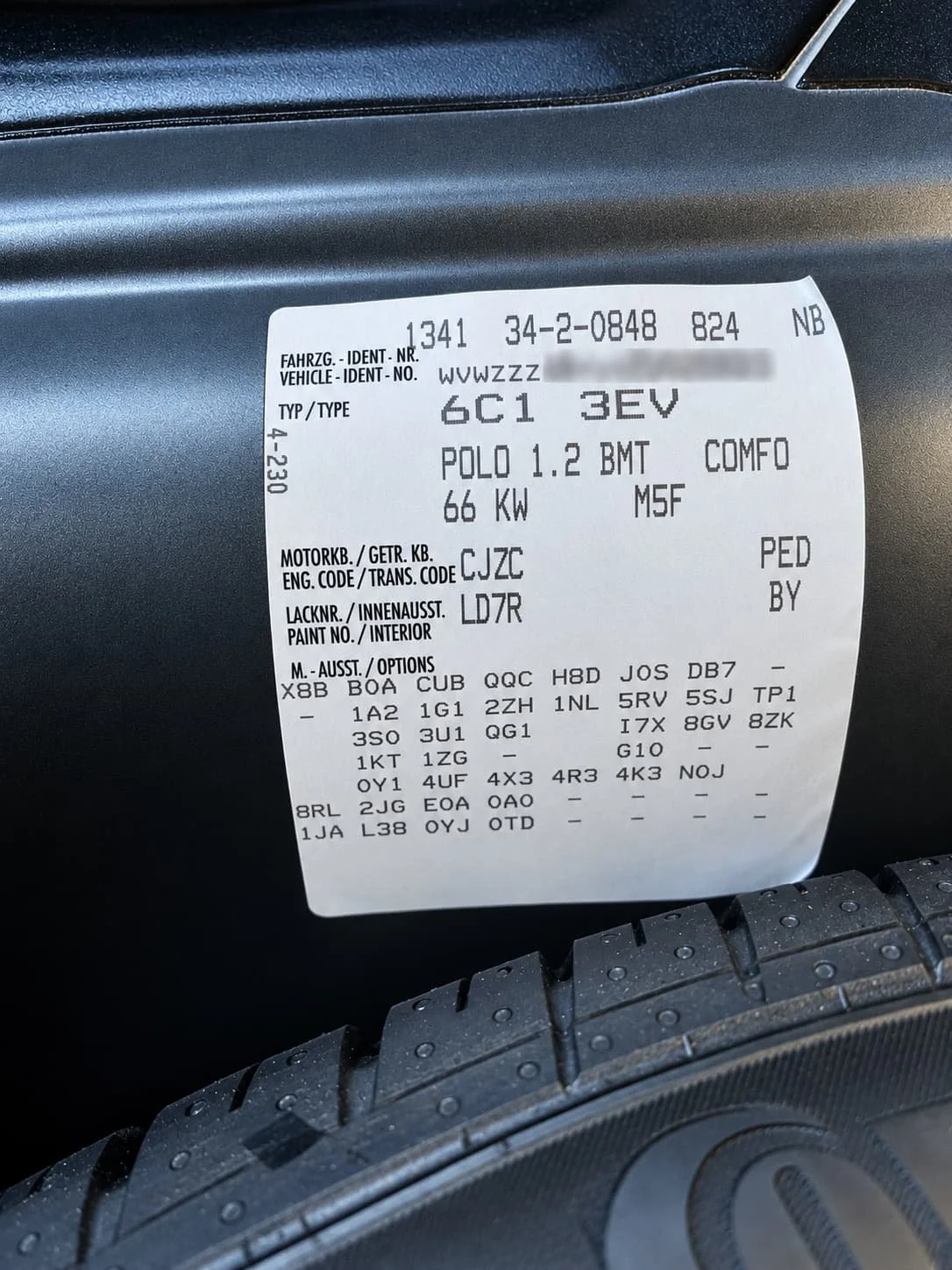
It depends on the engine. Older 1.2 and 1.4 TSI engines (roughly pre-2012/14) and the 1.8 and 2.0 TSI use chains. The newer 1.0, 1.2, 1.4 and 1.5 TSI engines use a belt. Your vehicle data sticker shows the engine code, or call us with your rego.
-
On first-generation Tiguans (about 2008–2016), the 2.0 TSI's timing chain tensioner is a known weak point. A rattle for a few seconds on a cold start is the warning sign, and it's worth checking promptly.
-
If it's a B7 Passat (about 2011–2015) with the 2.0 TDI, it most likely has the EA189 engine covered by VW's emissions recall. The B8 Passat's 2.0 TDI is the newer EA288. Check by VIN with a VW dealer.
-
VW NZ recalled 2,639 NZ-new cars with the 7-speed DSG built between June 2008 and September 2011, and runs a current mechatronics campaign covering cars built up to November 2014. An authorised VW dealer can check by VIN.
-
Yes. As long as the manufacturer's service schedule is followed, approved parts and fluids are used, and the work is documented, servicing at an independent workshop doesn't void your factory warranty.