
Does My Ford Ranger Have a Wet Belt? Replacement Guide & Cost (NZ)
If your Ford Ranger or Everest was built between late 2018 and early 2026 and has a 2.0-litre diesel engine, Bi-Turbo or Single-Turbo, it has a wet belt. Older Rangers with the 3.2-litre five-cylinder or 2.2-litre four-cylinder diesel don't. From mid-2026, Ford will switch new Rangers back to a timing chain, so this only applies to that seven-year window. Here's how to tell which one you've got, what happens if the belt fails, and what it costs to get ahead of it.
-
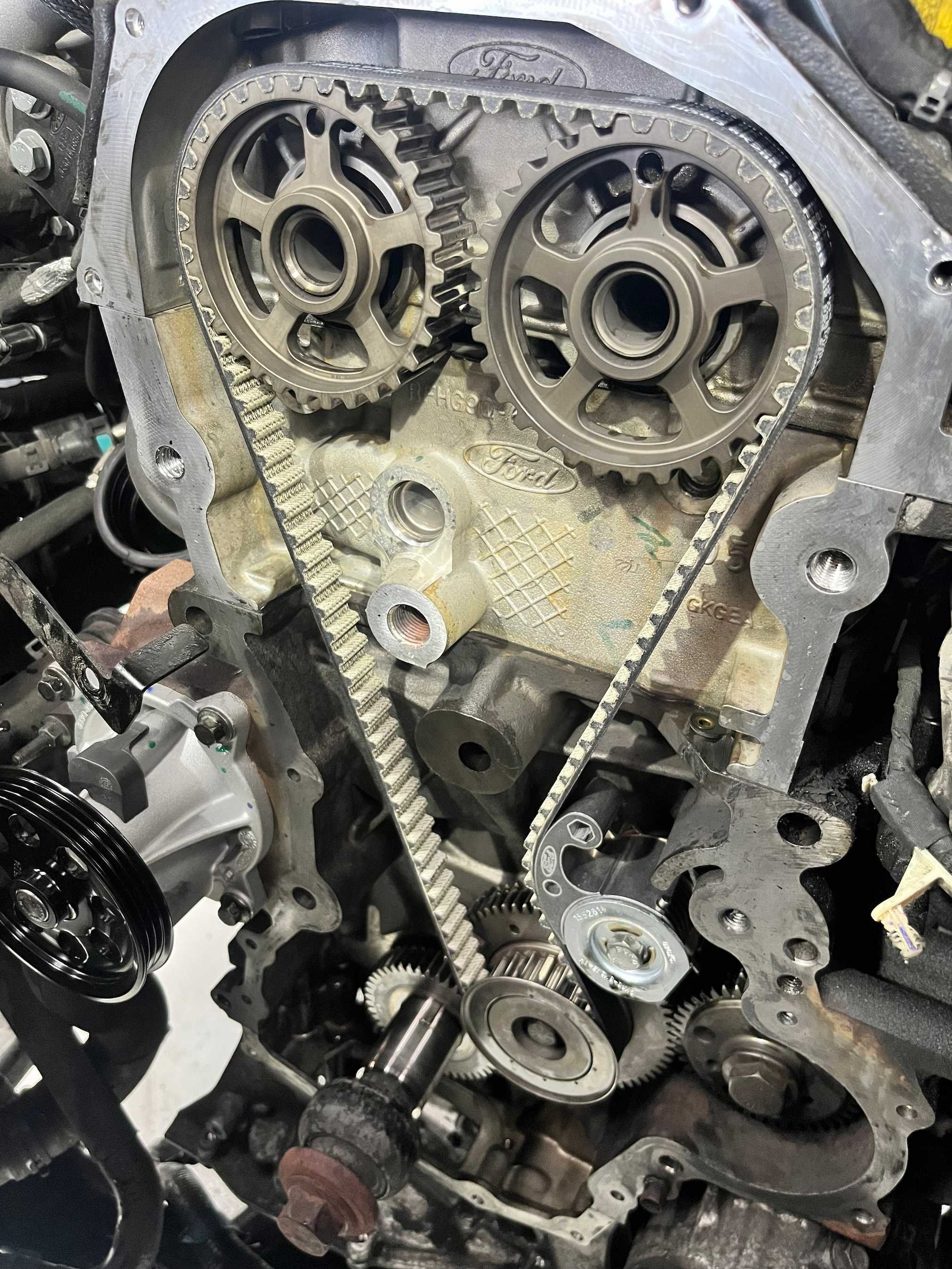
A "wet belt", Ford calls it a belt-in-oil system, is a timing belt that runs inside the engine, submerged in the same oil that lubricates everything else, instead of sitting dry on the outside of the block like a conventional timing belt. Ford introduced it on the 2.0-litre EcoBlue diesel to cut friction, noise, and a bit of weight compared with a timing chain.
In practice, it hasn't worked out as cleanly as intended. Running a rubber-and-fabric belt in oil means belt material can shed into the oil circuit over time, and on affected Rangers that's shown up as blocked oil pickups, starved oil pressure, and, in the worst cases, a belt failure that lets the pistons contact the valves.
It's also not purely a mileage story. Frequent short trips mean more DPF regeneration cycles, and each regen cycle puts a small amount of extra diesel into the engine oil to burn off soot. That diluted oil is exactly what the wet belt sits in, so a Ranger doing lots of short local runs can be at real risk well before a similar Ranger doing steady highway kilometres, regardless of what the odometer says.
-
Catch these early and a wet belt replacement is a straightforward, planned job.
A rattle, tick, or whine from the front of the engine, especially cold on startup often the first sign the belt or its tensioner is wearing.
Black flecks or a gritty texture in the oil on the dipstick or at an oil change, belt material shedding into the oil.
The check engine light, particularly alongside rough idling or a slight power loss.
Rough running or misfiring that wasn't there before.
Difficulty starting, or the engine cranking longer than normal.
Any one of these on its own is worth a check. More than one together means don't wait.
-
The 2.0 litre EcoBlue is an interference engine, which means the pistons and valves occupy the same space at different points in the rotation, the timing belt is what keeps them apart. If the belt lets go or jumps time, there's nothing stopping contact between them.
The practical range of mostly bad outcomes.
Bent valves and damaged pistons, requiring a cylinder head rebuild
Debris from a shredding belt blocking the oil pickup, starving the engine of oil pressure and damaging bearings and the crankshaft
In the worst cases, a written-off engine a new or reconditioned 2.0 litre EcoBlue isn't a cheap fix
This is the gap between a $3000 preventative job and a $25K engine replacement and it's entirely avoidable with a timely check.
-
Ford's official interval for the 2.0-litre EcoBlue wet belt is 150,000km or 10 years, whichever comes first. That's the figure on the factory service schedule, and it's a reasonable one if the belt performs as designed.
In practice, workshops across NZ and Australia are seeing wet belts show wear, oil contamination, or early tensioner problems well before that mark, commonly somewhere in the 80,000–100,000km range, particularly on Rangers used for towing, heavy loads, commercial/fleet duty, or a lot of short trips.
Our recommendation: treat 150,000km/10 years as the outer limit, not the target. If your Ranger is past 80,000km on its original wet belt, or you're not sure it's ever been done, it's worth a proper inspection oil condition, tensioner play, belt material even if nothing's showing up yet. That inspection is cheap. An engine rebuild isn't.
-
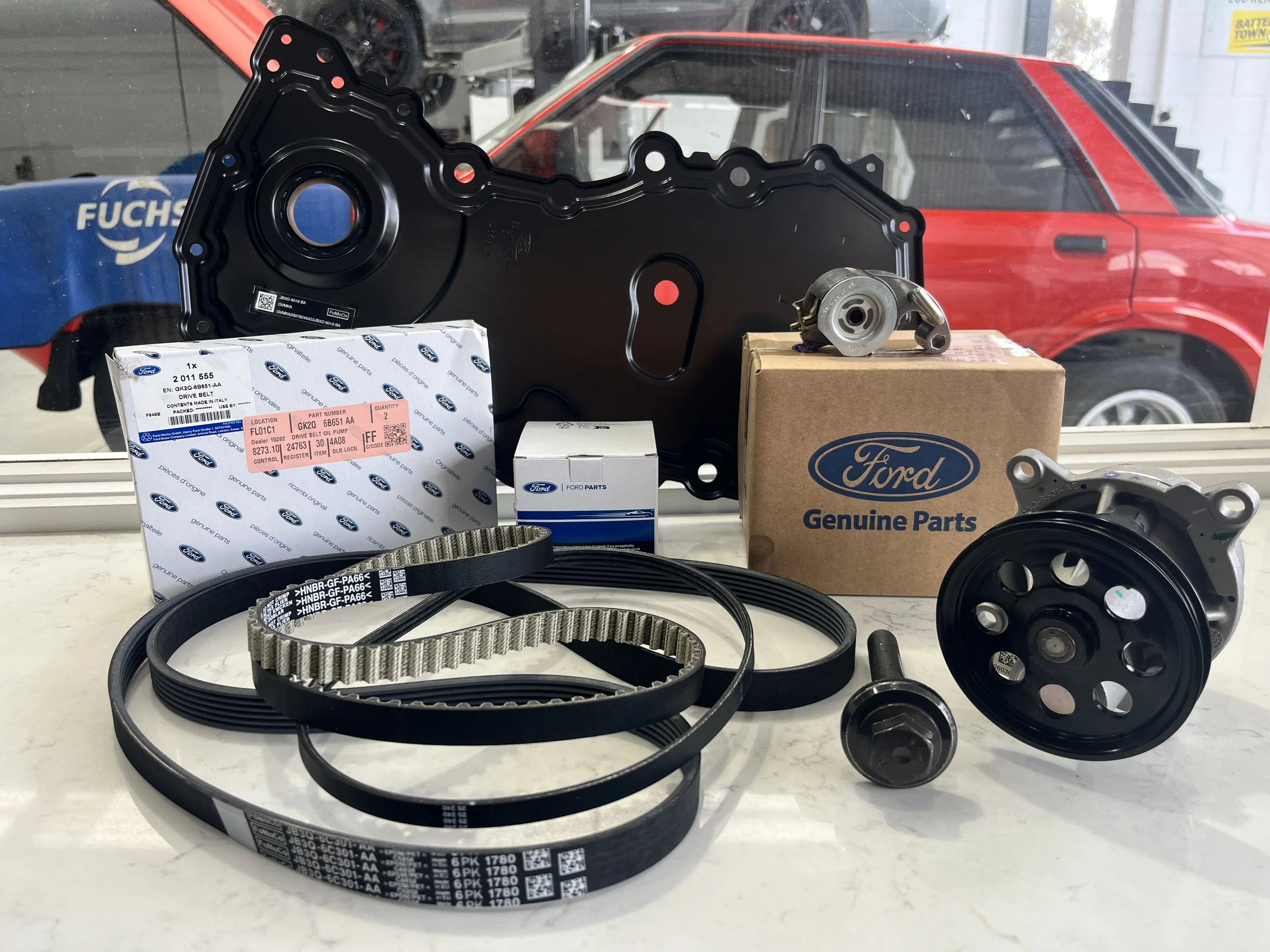
This isn't a simple external belt swap. Because the belt runs inside the engine, replacing it properly means removing the sump, draining the oil, replacing both internal belts (the timing belt and the belt that drives the oil pump), cleaning any shed belt material out of the oil system, and refitting with new seals and fresh oil. Doing one belt and leaving the other is a false economy the labour overlap means it makes sense to do both while everything's already apart.
There's also a genuine cost difference between 2WD and 4WD Rangers, purely down to labour 4WD models take longer because of access and drivetrain layout.
A properly done preventative wet belt job sump off, both belts, new seals, fresh oil and water pump, commonly runs in the $3000–$4,500 incl. GST range in NZ with 4WD models toward the top of that band. Pricing factors includes, the use of genuine parts versus aftermarket and if you replace your water pump, which is highly recommended. Use that as your reference point when undertndning the costs, rather than a lighter, belt-only quote you might see elsewhere a job that skips the water pump isn't really the same job.
Worth Consideration because this job already requires draining the oil, it's often smart to combine it with a scheduled service — the oil and filter change is being done either way, so bundling avoids paying for that twice.
-
Jeff, our foreman with over 20 years experience, carries out our wet belt inspections and replacements at our Silverdale workshop. Here's what's involved:
Compliance and history check, confirm engine variant (2WD/4WD, single or bi-turbo) and, where available, service history to see if the belt's ever been done.
Visual and oil inspection check for early warning signs (contamination, tensioner play) before anything's removed.
Sump removal and oil drain the only way to properly access the belt-in-oil system.
Both internal belts replaced the timing belt and the oil pump drive belt, plus tensioner and idlers, since cutting the job short on one belt to save time isn't worth the risk.
Debris cleanout clearing any shed belt material from the oil system before it circulates through fresh oil.
New seals, fresh oil and filter, resealed sump.
Road test and follow-up check confirm everything's running clean before it goes back to you.
Turnaround is a minimum of two days, with 10hrs labour (approx.) the a two day turnaround allows the sealant in the sump to set correctly overnight, otherwise you may encounter oil leaks, and we'll always show you what came out before it goes in the bin.
-
If your Ford Ranger or Everest’s 2.0-litre diesel is past 80,000km, or you've noticed any of the warning signs above, book an inspection with us. Next Gen Autos, 14 Forge Road, Silverdale, on the Hibiscus Coast.
Call 09 421 1680 or use the booking form below.
-
No. Only Rangers with the 2.0-litre diesel, Bi-Turbo or Single-Turbo built from late 2018 until the timingchain update in mid 2026. Older Rangers with the 3.2-litre five-cylinder or 2.2-litre four-cylinder diesel use a conventional external timing belt, not a wet belt.
-
Check your compliance plate for the engine code, or call us with your registration and we'll confirm it for you before you book anything.
-
It means the pistons and valves share the same space at different points in the engine's rotation, kept apart only by correct timing. If the wet belt fails or slips, there's a real risk of the pistons contacting the valves, which is why a wet belt failure is usually much more expensive than a normal belt failure on a non-interference engine.
-
150,000km or 10 years, whichever comes first. In practice, many workshops — us included — recommend an inspection from around 80,000km, since real-world wear often shows up earlier than the factory figure suggests.
-
A rattle or whine from the front of the engine, black flecks in the oil, the check engine light, rough running, or harder-than-usual starting. Any of these on their own is worth checking; more than one together shouldn't wait.
-
It's not a job for a driveway repair. The belt runs inside the engine's oil system, so it needs to be done alongside a full oil and filter change to clear out any shed belt material, and the tensioner and idlers need replacing at the same time. Get it done by someone who does this specific job regularly.
-
As of the first half of 2026, Ford moved the 2.0-litre diesel Ranger back to a timing chain and dropped the Bi-Turbo engine entirely, specifically to address wet belt durability. If your Ranger was built before that update, the wet belt is still there and still needs managing on the schedule above.
-
No. As long as manufacturer-approved parts and fluids are used and the work is documented, servicing at an independent workshop doesn't void your factory warranty. New Zealand's consumer and fair trading law backs this up; you're not required to return to a dealer to keep your warranty valid. However we strongly recommend it is done at an MTA approved workshop as it adds additional consumer protection.